

Clean drinking water is essential for a healthy life. Water quality and safety are evaluated through five main areas of testing: Bacteriological, Inorganic, Organic, Physical, and Radiological. While these categories together provide a complete picture of water health, many people mistakenly believe that if water passes a bacteriological (potability) test, it is safe in all respects. This is not true. Potable water simply means it is safe to drink from a bacteriological standpoint—it says nothing about chemical, physical, or radiological contaminants. For example, water can be free of bacteria yet still unsafe due to high lead content. Understanding the scope of each testing area ensures water is evaluated against all safety standards, not just one.
Fortunately, there are professionals out there—like the expert water testing technicians at Joiner Micro Labs—who can analyze samples of your well water. Certified laboratory technicians can test for basic analytes like the pH balance of the water coming out of your taps as well as more advanced testing to identify levels of harmful, health-threatening contaminants. You might be wondering what tests Joiner Micro Labs can run on your drinking water and what we, as water testing professionals, recommend. Here’s a quick breakdown of recommended tests performed in a Virginia-state-certified and accredited laboratory.
1. Bacteriological Analysis (Total Coliform and E. coli)
Testing for total coliform and E. coli is important because they are the contaminants established by the EPA for potable water testing, which means determining if your water is clean and safe to drink from a microbiological standpoint.
Total coliform refers to a group of bacteria commonly found in surface water, soil, vegetation, and the intestinal tract of animals. They are not inherently dangerous bacteria but can cause gastrointestinal distress and stomach-related issues. Wells are designed to be a closed system, so the presence of total coliforms in drinking water is used as an indicator that other, potentially more harmful bacteria could be present.
E. coli is a fecal coliform found in the digestive tracts of mammals. The presence of E. coli bacteria in drinking water indicates the presence of feces in your water supply, which is incredibly toxic for human consumption. Those with compromised immune systems, infants, and young children face higher risk from drinking water that has tested positive for E. coli.
2. Inorganic Contaminants (Nitrate, Nitrite, Heavy Metals)
Nitrate and Nitrite Content
Research has shown that high nitrate content in water sources is associated with higher incidences of thyroid imbalance, certain types of cancer, and possible negative effects on pregnancies.
One of the serious issues with excessive nitrate levels in drinking water is “Blue Baby Syndrome,” where contaminated infant formula mixed with high-nitrate water can interfere with the blood’s ability to circulate oxygen—potentially leading to serious health issues and even death. Excess nitrate is also harmful to the environment, promoting excessive algae growth. Algal blooms deplete oxygen in water, leading to fish die-offs.
Lead and Arsenic
Lead and arsenic are two heavy metals identified by the EPA and the Health Department as being incredibly toxic to humans. Pregnant women, children, and the elderly can be particularly vulnerable. Lead can damage the brain, kidneys, and red blood cell production.
Arsenic, according to the EPA, has no taste or smell when dissolved in water and can cause skin damage, circulatory problems, and has been linked to increased risk of cancer after long-term exposure.
3. Organic Contaminants (Pesticides, VOCs, SOCs)
The Virginia Department of Health (VDH) advises that well water owners evaluate additional contaminants in specific situations and locations.
- If you live near a farm, consider pesticides in addition to nitrate levels.
- If you live near mining operations, you may want to evaluate your water for other heavy metals.
- For gas drilling areas, residents can look for things like sodium, barium, strontium, and chloride.
The VDH website contains a full list of location-specific concerns.
4. Physical Characteristics (pH, Total Dissolved Solids)
pH
Per the EPA, pH is not a primary health concern, but rather a secondary contaminant that can affect the taste, appearance, and corrosivity of your water. The ideal range of pH for your pipes is between 6.5 and 8.5. Low pH can corrode pipes, allowing metals to leach into your water. High pH may cause mineral buildup and hard water, which impacts appliances and plumbing longevity.
Total Dissolved Solids (TDS)
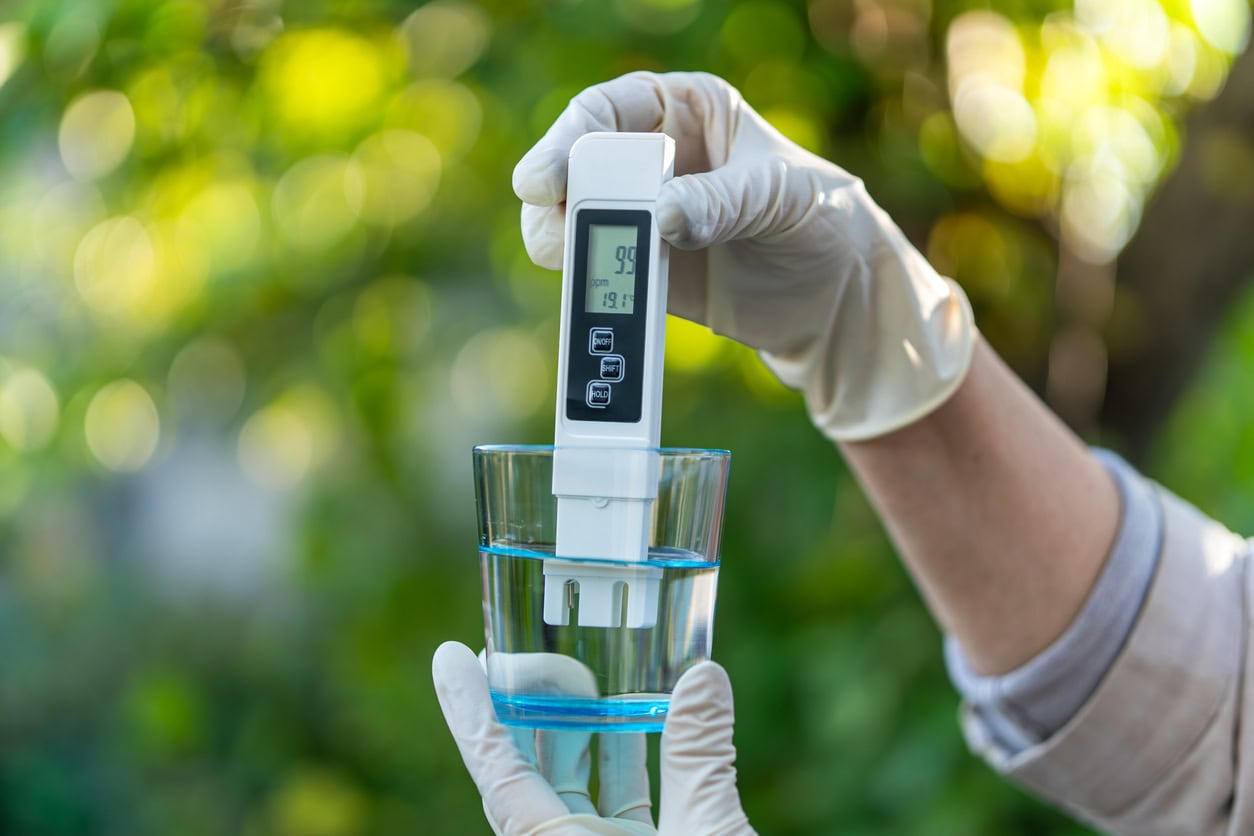
A TDS test measures the amount of dissolved particles in your water. While TDS itself may not be a health concern, it can cause scaling, unpleasant tastes (metallic, salty, or bitter), and increased wear and tear on appliances. High TDS is often used as an indicator that further testing may be needed to identify the specific dissolved substances present.
5. Radiological Contaminants
In some areas of Virginia, naturally occurring radioactive elements such as radon, uranium, or gross alpha/beta particles can seep into groundwater. These should be tested for in higher-risk locations as recommended by the VDH or EPA.
Well Water Testing in Northern Virginia
The CDC recommends choosing a state-certified water testing laboratory to test your well annually or any time your system is opened, such as when replacing pipes, faucets, fixtures, or well pumps. Wells are designed to be a closed system, and opening the system can introduce bacteria or other contaminants into your water. Joiner Micro Labs is an accredited laboratory that has been proudly serving Virginia as well as our neighboring states since 1991.
Are you a well owner needed to get your water tested in Northern Virginia?
Do you have questions about the testing process, water health, or safety concerns?
Visit our website to learn more about who we are and what we do, or contact Joiner Micro Labs and speak with one of our water testing experts to get personalized guidance and answers.